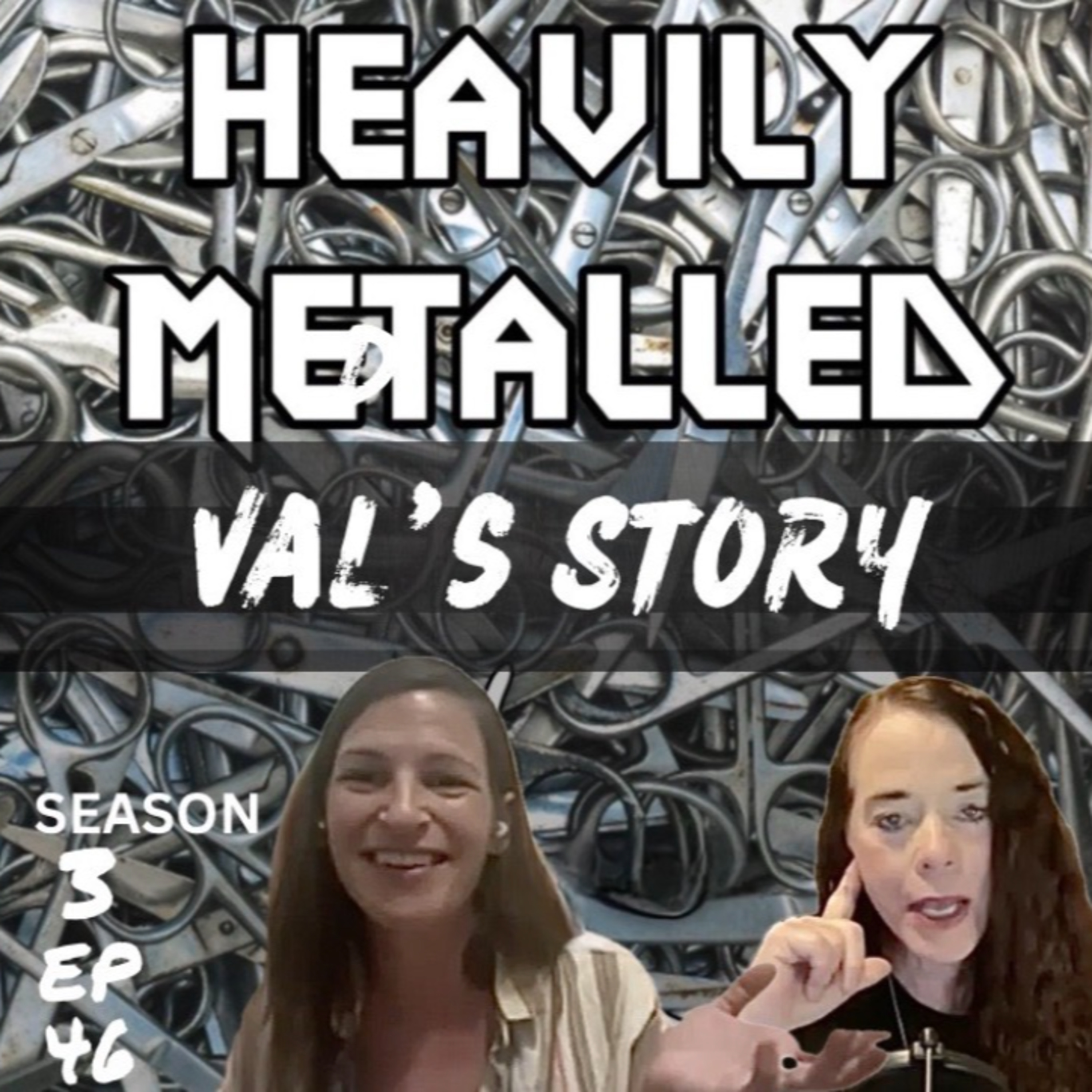
EP46 - Breast Cancer, Surgical Clips, Metal Allergies & Systemic Illness: Before & After Metal Clip Removal - Val’s Story

 Apple Podcasts
 Spotify
 Amazon Music
 Castro
 RSS Feed
 After surviving breast cancer, Val Johnson believed she was finally moving into healing and recovery. Instead, what followed was years of escalating neurological symptoms, muscle spasms, severe pain, heart rhythm abnormalities, inflammation, weight loss, nervous system dysfunction, and repeated medical dismissal — all while breast and abdominal surgical clips and biopsy markers remained inside her body.
In this deeply emotional and eye-opening episode of Heavily Metalled, Val shares her lifelong history of metal sensitivity and the terrifying health decline that began after breast cancer treatment, reconstructive surgery, abdominal surgical clips, and retained breast biopsy markers.
What makes Val’s story especially powerful is that she knew from childhood that her body reacted to metal. Earrings caused reactions. Dental metal caused pain. Yet despite repeatedly warning doctors that something felt wrong after surgery, she was continually told her symptoms “couldn’t” be related to the clips left inside her body.
As her health spiraled, Val began experiencing widespread systemic symptoms that mimicked serious neurological disease — muscle atrophy, spasms, numbness, heart rhythm changes, swallowing difficulties, dysautonomia-like symptoms, severe inflammation, and debilitating pain. Multiple specialists, scans, emergency room visits, and even Mayo Clinic failed to provide answers.
This conversation also touches on the growing concerns surrounding cumulative metal exposure in medicine. Val discusses learning later that certain chemotherapy agents contain platinum-based metals, while many MRI contrast agents contain gadolinium — a rare earth metal known to retain in the body in varying amounts. The episode explores the difficult questions many chronically ill patients are beginning to ask about total toxic burden, immune dysregulation, and why some individuals appear more sensitive than others.
Eventually, Val found a surgeon willing to remove the breast and abdominal surgical clips and biopsy markers that had been dismissed for years and is making huge strides in her recovery with many symptoms subsequently disappearing after explant.
In This Episode you will learn:
-
How retained breast and abdominal surgical clips may trigger systemic symptoms in sensitive patients
-
Why metal hypersensitivity can mimic neurological and autoimmune disease
-
The hidden metal exposures many patients never realize occur during cancer treatment and imaging
-
How chronic illness, trauma, and nervous system dysregulation can become deeply intertwined
~Links and Resources~
~To make a comment or petition to the FDA, click HERE.
~
~To follow Heavily Metalled on RUMBLE click HERE.
~
~To read the YouTube medical misinformation policy click HERE.
~
~Get the Low Nickel Diet cookbook HERE.
~
~To learn more visit HeavilyMetalled.com.
~
Check out the “Heavily Metalled” resource page: https://www.heavilymetalled.com/resources
~
Sign up for the FREE newsletter and email list on HeavilyMetalled.com & get a FREE symptoms list & next steps bundle!~Sign the petition asking medical providers and facilities to pre-screen for metal hypersensitivity here: http://tinyurl.com/2458ea8
~
Follow Heavily Metalled on Facebook: https://www.facebook.com/HeavilyMetalled
~
Follow Heavily Metalled on Instagram: https://www.instagram.com/heavilymetalled/
~
Subscribe to Heavily Metalled on YouTube: https://www.youtube.com/@HeavilyMetalled
~
Check out our sponsor https://melisa.org
***Many WONDERFUL, supportive special-interest communities exist for metal allergies and diet, hardware issues, medical devices, etc., online and on social media. They have many resources and often act as a collective think-tank. I owe many parts of my recovery to knowledge obtained in such groups. Search keywords to join these groups and find your tribe!***